OEM Service – Leverage for fast and efficient new product development
In the context of the fiercely competitive cosmetics market, constantly launching new products is a vital factor for businesses to maintain their position and expand their market share. However, developing new products requires large resources, extensive expertise and close coordination between departments. OEM services have emerged as a comprehensive solution, helping businesses shorten the time to market, optimize costs and ensure superior quality.

1. Market research and identification of customer needs
The new product development process begins with a thorough market survey. Businesses need to deeply analyze consumer trends, customer behavior, the problems they are facing and unmet needs. This does not stop at statistics but also involves in-depth interviews, field surveys, analysis of sales data and feedback from distribution channels.
In particular, competitor assessment is an indispensable step to identify the strengths and weaknesses of existing products, thereby finding opportunities for differentiation and identifying “gaps” in the market that new products can exploit.

2. Conceptualize and design product formulas
Once the company has a comprehensive view of the market, the company and its OEM partner will begin the product ideation phase. The OEM’s R&D team not only relies on inspiration but also carefully analyzes survey data to propose a formula that fits the brand’s goals. Each idea is tested for creativity, practical application, and consumer safety.
The selection of raw materials, determination of active ingredient content, control of safety indicators (such as pH, irritation potential, etc.) are all strictly implemented. In particular, new trends such as the use of organic ingredients, enzyme technology, nano, etc. will be considered to create products that are both new and meet international standards.

3. Packaging design and brand identity building
Packaging is not only a protective “coat” for the product but also a powerful marketing tool. The OEM design team will coordinate with the business to build a unified brand identity, from logo, color, material to communication message. Every detail on the packaging is carefully considered to ensure both aesthetics and convey the core values of the product. In addition, choosing environmentally friendly packaging materials and convenient design are also factors that help the product score points with modern consumers.

4. Prototype production and quality testing
Once the idea and formula are finalized, the OEM partner will proceed to produce a small-scale prototype. This prototype is not only tested for its sensory properties (color, scent, texture), but also undergoes rigorous testing for its effectiveness, safety, skin compatibility, or actual usage needs. The company will collect feedback from the target customer group, and then work with the OEM to adjust the formula and design until the best results are achieved. This is the stage that helps minimize risks when the product is officially launched on the market.

5. Mass production and quality control
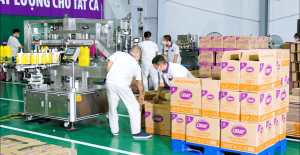
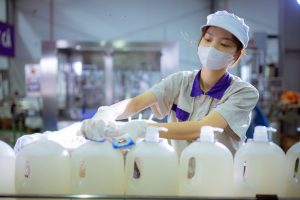
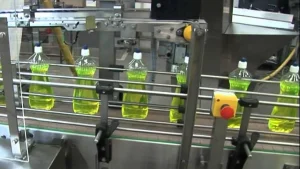
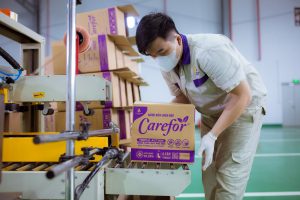
Once the sample has passed the test, the product will be mass-produced on a modern automated production line. Each batch is thoroughly tested for chemical, microbiological and sensory indicators and must fully meet international quality standards as well as relevant legal regulations. The OEM’s quality control team will closely monitor each stage, ensuring product consistency, minimizing manufacturing errors and return risks.

6. Marketing support and product launch
A good product cannot be successful without an effective marketing strategy. OEM partners like THT will support businesses in building professional marketing documents, from sharp product images, promotional videos, communication content to sales team training documents. In addition, OEM also advises on product launch strategies, organizes events, connects with distribution and communication channels to optimize customer reach. Thanks to that, businesses can quickly create a buzz, attract market attention right from the first days of launch.
7. After-sales service and customer care
After the product has been launched, OEM continues to accompany businesses through professional after-sales services. THT commits to quality warranty, supports returns if manufacturing errors are detected, and advises on developing new product lines based on actual market feedback. The customer care team is always ready to answer questions, support handling any problems that arise, helping businesses confidently develop their business and build strong relationships with end customers.
See more at:>> After-sales service when cooperating with THT Vietnam
OEM service is a comprehensive solution that helps businesses shorten the time to launch new products, optimize costs and improve competitiveness in the modern cosmetics market.
Cooperating with a reputable OEM partner like THT Vietnam , businesses can be completely assured of quality, progress and business efficiency, while focusing on developing a sustainable brand in the long term.
In the cosmetics industry, product quality is only half of success. The other half – and increasingly important – is after-sales service. For businesses choosing to cooperate with THT Vietnam, after-sales service is not only a long-term commitment but also an optimal solution to help businesses develop sustainably and expand their markets.
This article will help you understand why after-sales service at THT Vietnam is considered professional and a solid “launching pad” for all partners.
What is after-sales service? Why should businesses care?
After-sales service is not simply a product warranty after delivery, but also a whole system of customer support and care throughout the cooperation process. For the field of cosmetic processing, after-sales service acts as an “insurance” for the business, helping to solve any problems that arise, maintain product quality and support long-term business development.

Many businesses have encountered defective products, poor communication, or lack of support when it comes to improving new products. At that time, a manufacturing partner with professional after-sales service will help businesses focus on developing their brand and expanding their market without having to worry about operational risks, including:
- Proactive warranty and quality control
- Media and marketing support
- New product development consulting
- Product training
- Customer care
- Support to solve all problems arising during business process
After-sales services at THT Vietnam
Warranty and proactive quality control: THT Vietnam not only commits to product warranty but also proactively checks the quality of each batch before delivering to customers. If any manufacturing defect is detected, THT will quickly exchange and return it, not letting partners suffer any damage. The technical team is always ready to support in handling any product problems, helping businesses maintain their reputation with customers.
Media and marketing support: Accompany partners to build appropriate communication strategies for each product line and each stage of brand development. The marketing team will advise on how to utilize digital media channels, organize product launch events, create attractive advertising content and support connections with major distribution partners.
Consulting on new product development and trend updates: With an experienced R&D team, THT Vietnam is always proactive in proposing new formulas, designing creative packaging and supporting product testing before launch. Partners will be advised on testing standards and legal procedures, helping to shorten the time to market and minimize legal risks.
Product training: The partner’s sales team and consultants will be guided to convey the correct product information to the end consumer, thereby increasing the conversion rate and building trust with customers. In addition, THT also supports the development of a professional customer care process, helping businesses retain old customers and attract new customers.
Customer care: Whether it is a technical issue, a product question or an urgent need for support, partners always receive a quick response via hotline, email, Zalo. This helps businesses handle all situations promptly, without business interruption and always maintain the satisfaction of the end customer.

Benefits of choosing THT Vietnam’s services
Increase satisfaction, retain customers for a long time: Dedicated after-sales service helps businesses build strong relationships with customers, increase the rate of customers returning and recommending products.
Enhance reputation, build sustainable brand: THT’s companionship helps partners affirm their position in the market, build trust with consumers and distributors.
Support business development, rapid market expansion: With comprehensive support from production to communication, partners can easily expand their distribution system, reach new customers and grow sustainable sales.

After-sales service at THT Vietnam – The difference creates value
- Actively accompany customers: not only delivering goods but also continuously updating, caring for and supporting partners throughout the business process.
- Commitment to transparency and professionalism: All after-sales processes are standardized and transparent, ensuring maximum benefits for partners.
- Flexible and creative: Always ready to change and update new solutions to meet the constantly growing needs of the business.

After-sales service at THT Vietnam not only helps businesses feel secure about product quality but also provides comprehensive support from communication, new product development, team training to customer care. This is a solid “launching pad” to help businesses build strong brands, expand markets and develop sustainably in the competitive cosmetics industry.
Let THT Vietnam become your strategic partner and conquer the Vietnamese cosmetics market with you.
In the context of the increasingly competitive cosmetic chemical market, choosing to cooperate with a professional processing unit is becoming an inevitable trend for businesses that want to build their own brand, optimize costs and ensure product quality. Not only does it help save resources, cooperating with a processing unit also brings many outstanding benefits in terms of technology, management and brand development. This article will analyze in detail the outstanding benefits when businesses choose to accompany reputable cosmetic chemical processing partners.
Save money and time
One of the biggest benefits of working with a manufacturing unit is the ability to save on initial investment costs. Instead of having to build factories, purchase machinery, recruit and train staff, businesses only need to focus on product ideas and business strategies. The manufacturing unit will be responsible for the entire production process, from formula research, testing, production to packaging finished products.
Not only does this cooperation save costs, it also helps businesses significantly shorten the time to bring products to market. Professional processing units own modern production lines, systematic quality management systems and optimal working processes. Thanks to that, every stage is carried out quickly and accurately, minimizing risks. Businesses can take advantage of this to quickly dominate the market and promptly meet customer needs.
Quality and safety assurance
Product quality is always a vital factor for any cosmetic brand. Cooperating with a professional processing unit, businesses will be assured of the quality and safety of each product batch. Reputable partners often apply strict production standards such as GMP, ISO 22716, strictly controlling from input materials to final products.
The testing process is carried out systematically, including microbiological testing, physical and chemical indicators and skin testing. Each batch of products must pass strict tests before leaving the factory, ensuring that they do not contain impurities, do not cause irritation and fully meet the regulations of the Ministry of Health as well as international standards. Thanks to that, businesses can confidently develop products and build solid trust with consumers.
Support for developing private brands
Another outstanding advantage when cooperating with a manufacturing unit is the ability to develop a private brand in a flexible and professional manner. The manufacturing unit not only provides production services but also accompanies the business from the stage of consulting ideas, developing exclusive formulas to designing packaging and labels in accordance with the brand orientation.
With practical experience and market understanding, processing partners will help businesses choose raw materials, formulas and product lines that are suitable for consumer trends. In particular, businesses completely own their own formulas, designs and brands without worrying about duplication or copying in the market. This is an important factor that helps brands create a distinctive mark, increase competitive value and expand market share.
Comprehensive after-sales service and consultation
Not only stopping at the production stage, professional processing units also provide comprehensive after-sales services and consulting for partners. Enterprises will be supported in the process of testing, product announcement, registration and solving problems arising after the product launch. A team of experienced experts is always ready to advise, update new trends and accompany enterprises on the long-term development journey.
After-sales service is also reflected in the absolute confidentiality of formulas, support for product improvement, and upgrading of production lines when businesses expand their scale. Thanks to that, businesses are always proactive in improving quality, diversifying products, and flexibly responding to market needs.
THT Vietnam – cosmetic chemical processing unit with 20 years of experience
THT Vietnam is one of the leading cosmetic chemical processing units, having accompanied many large and small brands in the market for over 20 years. With a modern factory system, a specialized R&D team and an international standard production process, THT has helped many businesses save costs, improve product quality and successfully build their own brands. THT team not only provides technical support but also consults on brand development strategies, contributing to the sustainable success of partners.

Cooperating with a professional cosmetic processing unit is the optimal solution to help businesses save costs, ensure quality, develop their own brand and receive comprehensive support from a team of experts.
Choosing a reputable partner like THT Vietnam will be a strategic step to help businesses develop steadily and win over customers. If you are looking for a quality cosmetic processing solution, contact us now for advice and support from leading experts in the industry.
In the context of the increasingly developing cosmetic industry, owning an internationally standardized processing process is a vital factor for businesses to build reputation, expand market share and build trust with customers. However, not everyone clearly understands the necessary steps as well as the standards that must be followed in this process. The following article will help you visualize in detail the modern cosmetic processing process, and at the same time provide important notes to choose the right manufacturing partner.
What is cosmetic processing?
Cosmetics processing is the process in which a brand cooperates with a professional manufacturer to create products under its own brand name. The manufacturer will take care of everything from formula research, testing, production to quality testing and packaging of finished products. Thanks to this, businesses can save on investment costs for factories, machinery, and human resources while still owning high-quality products that meet market demand.

Steps in the international standard cosmetic chemical processing process
An international standard cosmetic processing process not only requires investment in technology but also requires close coordination between stages. Below are the important steps that any business needs to master.
Research and development of formula: This is the first step and also the foundation that determines the success of the product. The R&D team will analyze the market, determine the actual needs of consumers, then build a suitable formula. The selection of raw materials, determination of content and compatibility testing of ingredients are all carefully carried out. The formula must not only ensure effectiveness but also be safe, complying with the Ministry of Health’s cosmetic regulations as well as international standards.

Product testing: After the formula is finalized, the product will be tested for physical, chemical, sensory and skin compatibility. If any signs of irritation or unwanted effects are detected, the formula will be adjusted until it meets the standards. This stage helps businesses limit risks when bringing products to market.
Mass production: Once the formula has been optimized, the product will enter the mass production stage. Input materials are carefully checked for origin and quality. Modern, automated production processes help ensure consistency for each batch. Each stage from mixing, homogenizing, filling to packaging is closely monitored by a team of experienced technicians.

Quality testing: This is an indispensable step to ensure that each batch of products meets the standards of safety, efficiency and stability. Microbiological, chemical and physical indicators will be tested in the internal laboratory and, if necessary, samples will be sent to independent testing centers. Retaining product samples is also a mandatory regulation for comparison, complaint settlement or traceability when necessary.
Packaging and finishing the product: Packaging not only helps protect the product from environmental impacts but is also a factor in brand recognition in the market. Packaging must ensure aesthetics, clear information about ingredients, uses, instructions for use, production date, expiry date and compliance with legal regulations. Proper packaging helps the product maintain optimal quality when it reaches consumers.

International standards to be followed
In order for products to be widely circulated and build reputation in the international market, businesses need to strictly comply with global quality management standards. In particular, GMP (Good Manufacturing Practices) is the most important standard. GMP requires strict control of all factors affecting product quality, from raw materials, equipment, production environment to personnel. Compliance with GMP helps minimize risks, ensuring consistent, safe and effective products.
In addition, ISO is a quality management standard specifically for the cosmetics industry. This standard focuses on principles of hygiene, traceability and risk control throughout the entire production process. Possessing ISO certification not only helps businesses improve their management capacity but also acts as a “passport” for products to access European markets.

In addition, businesses need to comply with the regulations of the Ministry of Health and international organizations on the list of ingredients, usage content, safety testing and product declaration. This helps protect consumer rights, avoid legal risks and build sustainable trust with customers.
Important notes when choosing a processing partner
Choosing a processing partner is a strategic step, directly affecting the product quality and long-term development of the business. A reputable partner will have many years of experience, own a modern factory system and a production scale suitable for development needs. A specialized R&D team, experienced engineers and testing experts are indispensable factors.

The formula security policy and intellectual property rights also need to be given top priority. The processing partner must commit to absolutely protecting the formula’s secrets, not disclosing or using it for purposes other than the signed contract. In addition, businesses should choose units with good after-sales service, consulting support, complaint resolution and companionship in the process of developing new products.
Before signing a cooperation agreement, businesses should directly visit the factory, inspect the production process and evaluate the actual capacity of the partner. This helps ensure transparency, trust and minimize risks in the long-term cooperation process.
The international standard cosmetic chemical processing process is a solid foundation for building a reputable brand and sustainable development in the competitive market. Strictly adhering to global standards, choosing professional processing partners and closely controlling each production stage will help your products not only be safe and effective but also conquer domestic and international consumers. If you are looking for a quality, reputable cosmetic chemical processing partner.
Please contact THT Vietnam for consultation, support and outstanding product development success.
Processing product cost – Key to competitiveness in the cosmetics market
In the cosmetics industry, the cost of processed products is a key factor determining the profit, competitiveness and ability to expand the market share of the enterprise. Understanding the factors affecting the cost not only helps enterprises proactively build a reasonable pricing strategy but also optimize resources and improve business efficiency in an increasingly fierce market context.
Input materials – The foundation for determining the cost of processed products
The quality and origin of raw materials are the first factors that determine the cost of processed products. If the enterprise chooses imported, organic raw materials or special ingredients (such as natural extracts, high-grade active ingredients), the cost will be much higher than that of common raw materials.
In addition, the raw material market always fluctuates according to the season, foreign exchange rates and global supply and demand situation. Enterprises need to proactively build relationships with many suppliers, closely monitor market fluctuations to have plans to reserve or replace raw materials in a timely manner.

Order Size – Leverage Scale Effects to Reduce Costs
Mass production helps businesses maximize machine capacity, reducing labor and material costs. On the contrary, small orders will have to bear higher fixed costs per product, and it is difficult to negotiate raw material and transportation prices. To optimize costs, businesses should plan production cycles, consolidate orders or cooperate with other partners to increase order size, thereby reducing unit costs.

Production technology – Factors to improve quality and optimize costs
Modern, highly automated production lines not only help to minimize errors but also save time, manpower and raw materials. For example, an automatic filling system can reduce raw material loss, ensure accurate dosing and increase productivity many times over manual production.
However, the initial investment cost for new technology is quite large, requiring businesses to carefully calculate the ability to recover capital and long-term benefits. In addition, modern technology also helps businesses meet international quality standards, expand export opportunities and cooperate with major partners.
Packaging design – Smart investment to create added value
Packaging is not only a protective layer for the product but also a powerful marketing tool. A creative packaging design and sophisticated printing will increase production costs, but will help the product stand out on the shelf, attract customers and enhance the brand. Businesses need to consider the cost of investing in packaging and the marketing effectiveness it brings. Sometimes, a minimalist but sophisticated design helps save costs while still creating a unique mark for the product.
Labor costs – Influenced by skill level and degree of automation
Labor costs depend on skill level, local wages, and the level of automation in the factory. Modern, highly automated factories will reduce dependence on labor, save costs, and ensure consistent quality. However, businesses also need to invest in training machine operators and quality control to avoid errors and improve production efficiency.

Requirement of inspection and certification – Quality assurance, increased costs
In order for products to be allowed to circulate on the market, especially in modern retail channels or for international export, businesses are required to meet inspection and certification standards such as ISO, GMP, etc. The cost of these inspection and certification activities will add to the product price. However, this is a necessary investment to build reputation, expand the market and protect consumers.
Hidden and incidental costs – need to be tightly controlled
In addition to the main costs, businesses also have to face many hidden costs such as transportation, storage, insurance, sales discounts, marketing, etc. If not well controlled, these costs can arise beyond the budget, causing the product to “increase” in price and affecting profits. Businesses need to build clear contracts with processing partners, be transparent about all costs and regularly review and optimize arising costs.

Understanding the factors affecting the cost of processed products is the key to helping businesses proactively build a reasonable pricing strategy, optimize costs and improve competitiveness in the cosmetics market. Businesses should regularly update fluctuations in the raw material market, invest in appropriate technology, optimize production processes and choose transparent and reputable processing partners. Only when controlling costs well can businesses develop sustainably, expand market share and build a strong brand in the cosmetics industry.
Choose a reputable, transparent and experienced processing partner like THT Vietnam to ensure your products are always of high quality at the most optimal price!
In the cosmetics industry, ordering large quantities of production always carries many financial risks: from inventory, capital turnover, to product quality control and additional costs. Especially for small and medium enterprises, each investment decision needs to be carefully considered to ensure financial security and maintain competitiveness in the market. OEM processing has become the optimal solution to help cosmetics businesses minimize risks, save costs and focus on sustainable brand development.
Common financial risks when ordering in bulk
Large inventory, difficult to rotate capital: When ordering large quantities, businesses must invest a significant amount of capital in raw materials, production and storage. If the product is not sold out or consumed slowly, capital is “buried” in the warehouse, directly affecting cash flow and business operations.
Uneven product quality: Large -scale production is prone to technical errors and unstable quality between batches, leading to the risk of returned goods and affecting brand reputation.
Costs arising from suboptimal production processes: If the business lacks experience or the production line is not modern, operating, maintenance, and labor costs may increase beyond the initial estimate.
Market risk: Consumer trends change rapidly, products in inventory for a long time become outdated and lose commercial value.

OEM Processing – An Effective Solution to Minimize Financial Risks
Choosing OEM manufacturing is a smart solution for businesses that want to develop products quickly, save costs and minimize financial risks in the context of increasingly fierce competition.
Flexible production according to order
This is one of the great advantages of modern businesses when cooperating with OEM factories. Thanks to the ability to meet all order sizes, from small to large, businesses can flexibly order according to actual needs without worrying about excessive inventory. This helps to minimize storage costs and limit financial risks.
In addition, businesses do not need to invest heavily in factories, machinery or personnel, but only need to focus on market development and brand building, thereby saving resources and improving business efficiency.

Strict quality control
In addition, strict quality control processes at modern OEM factories are key to ensuring products always meet international standards. Automated production lines help control quality at each stage, ensuring product consistency and minimizing the risk of returns.
A team of experienced experts will advise on formulas, select suitable raw materials and strictly control input and output quality. Therefore, businesses can be completely assured of product quality when cooperating with reputable OEM partners.

Smart ordering strategy consulting
Not only stopping at production, OEM factories also provide smart ordering strategy consulting services. The team of experts will support businesses to analyze the market, forecast demand and build appropriate production plans, helping to avoid over- or under-ordering, thereby minimizing financial risks.
When the market changes, businesses can easily adjust their formulas and product designs without having to invest additional costs in new production lines. This flexibility helps businesses quickly adapt to consumer trends and optimize business efficiency.

Professional after-sales service
When there is a problem with quality or a need for exchange or return, businesses will be supported to handle it quickly, protecting the maximum interests of customers. In addition, businesses are also consulted and supported to launch new products quickly, saving testing costs and shortening the time to reach the market. Thanks to that, businesses can confidently develop products, build their own brands and expand market share sustainably.

Benefits of OEM processing cooperation at THT Vietnam
With over 20 years of experience in the field of cosmetic processing, THT is proud to be a reputable OEM partner, helping hundreds of large and small businesses minimize financial risks when ordering in bulk:
- Saving costs on machinery and personnel investment: Businesses do not need to build factories and do not worry about maintenance and operating costs.
- Optimize production process: Automated production line, strict quality control, minimize the risk of unexpected problems.
- Shorten product launch time: Professional production process, support from idea to finished product, helping businesses quickly reach the market.
- Improve competitiveness, expand market: Quality products, reasonable prices, easy access to modern retail channels and international export.
- Dedicated after-sales service: Support for returns, product warranty, consulting on new product development, accompanying businesses long-term.

Optimal OEM processing process at THT
The OEM manufacturing process at THT is methodical, transparent and flexible, ensuring to meet all customer needs from idea to finished product.
Step 1: Survey needs and consult solutions
THT always listens to customers’ needs and business goals, advises on formulas, packaging, and actual order quantities. The team of experts will analyze the market, identify target customer segments, and propose the most optimal solution for each project.
Step 2: Flexible production planning
After agreeing on the idea, conduct market analysis, forecast consumption demand, and make detailed production plans for each stage. This process helps optimize cash flow, minimize inventory, and ensure products are always ready to meet market demand.
Step 3: Production and quality control
Applying automated production lines, strictly controlling each production stage. Each batch is quality tested, ensuring product consistency, meeting international standards and complying with safety regulations.
Step 4: Delivery and after-sales service
Products are delivered on schedule, with warranty as committed. THT accompanies customers throughout the business process, supports in handling arising problems and advises on new product development.
OEM processing is becoming a strategic choice for many businesses today thanks to its ability to optimize costs, control quality and minimize financial risks. When cooperating with a reputable partner like THT Vietnam, businesses not only take advantage of a modern production system but also receive comprehensive support from consulting, production to after-sales service. This is a smart solution to help businesses focus on brand development, market expansion and competitiveness enhancement.
If you are looking for a safe and effective direction for your products and brands, THT Vietnam is the right choice to firmly step into the modern market.
Detergent Packaging – The Key to a Sustainable Green Brand
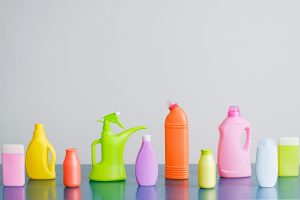
In an era where consumers are increasingly concerned about health and the environment, environmentally friendly detergent packaging has become an inevitable trend in the cosmetics industry. Not only contributing to protecting the green planet, green packaging design also helps businesses enhance brand value, attract modern customers and expand export markets. Detergent
packaging is now not only a “coat” to protect the product but also a strong message about social responsibility and commitment to sustainable development of the business.

Why is environmentally friendly laundry detergent packaging an inevitable trend?
- Growing environmental awareness: Consumers prefer to choose products with packaging that is easily recyclable, biodegradable or made from recycled materials to reduce plastic waste.
- Increasingly stringent regulations: Many countries are tightening regulations on plastic packaging, pushing businesses to switch to green materials.
- Enhance brand value: Green packaging helps businesses create sympathy, build a professional and prestigious image in the eyes of customers and partners.
- Long-term cost optimization: Using environmentally friendly materials helps businesses save on waste treatment costs and easily access modern retail channels.
Outstanding trends in environmentally friendly laundry detergent packaging design
Use recycled, biodegradable materials
- Businesses increasingly prioritize the use of bioplastics (PLA, PHA) produced from corn starch, sugarcane, potatoes, etc. with the ability to decompose naturally, without leaving plastic residue in the environment.
- In addition, kraft paper and carton are also chosen for outer packaging because they are easy to recycle, environmentally friendly and easy to print, expressing a minimalist, modern style.
- Many brands have developed reusable packaging lines in the form of bags and refillable bottles, helping to significantly reduce the amount of plastic waste generated and encourage sustainable usage habits.
Minimalist, modern, green-inspired design
- The current trend in laundry detergent packaging design focuses on minimalism, using neutral colors such as green, blue, white, brown combined with natural motifs such as leaves and water drops to emphasize the natural element.
- Environmental protection messages, recycling symbols, green certifications and sustainable development slogans are clearly printed on the packaging, helping customers easily identify and perceive the green value of the product.
- Many packaging designs are also multi-purpose, can be reused for other purposes such as storing things, planting trees, creating crafts, contributing to extending product life cycles and reducing waste.
Environmentally friendly printing technology
- Pioneering businesses use biological printing ink extracted from plants, does not contain toxic chemicals, ensuring safety for users’ health and the environment.
- Using energy-saving printing techniques reduces CO₂ emissions during production, helping to reduce the company’s carbon footprint. This technology not only improves the quality of packaging but also demonstrates the brand’s strong commitment to sustainable development.
Benefits of investing in environmentally friendly laundry detergent packaging
Enhance brand image: demonstrate social responsibility, create sympathy and trust in customers. In particular, young customers, modern families and international consumers always appreciate brands that are conscious of environmental protection, thereby increasing loyalty and spreading positive brand awareness.
Increased competitiveness: Products easily access modern retail channels, large supermarkets and international export markets, where environmental standards are increasingly tightened. This helps businesses expand market share, increase sales and improve their competitive position in the market.
Responding to green consumption trends: Today’s consumers are not only concerned with product quality but also with the impact of products on the environment. They are willing to pay more for products with green, environmentally friendly packaging, helping businesses increase product value and sustainable profits.
Optimizing long-term costs: reducing waste treatment costs, taking advantage of collection and recycling programs of retailers and partners. At the same time, businesses also avoid fines and costs arising from violations of environmental regulations, contributing to optimizing operating costs and long-term development.

Criteria for evaluating environmentally friendly laundry detergent packaging
- Safe materials, easily recycled or biodegradable.
- Minimalist design, green inspiration, easy brand recognition.
- Clear information on ingredients, recycling instructions, green certification.
- Meet international standards on safety and environment (ISO, SGS, FSC…).

Experience in building a successful green laundry detergent brand
- Invest in market research: Understand the needs, consumer behavior, and green trends of target customers.
- Focus on product quality: Not only the packaging but also the detergent formula needs to be safe, effective, and free of toxic chemicals.
- Build a strong communication campaign: Emphasize green messages, social responsibility, call on customers to join hands to protect the environment.
- Cooperate with environmental organizations and programs: Participate in campaigns to collect plastic waste, plant trees, raise public awareness, and create positive influence for the brand.
Follow THT Vietnam to update more useful information about green trends and sustainable development solutions in the cosmetic industry!
Choosing the right detergent for each type of fabric not only helps clothes stay colorfast and soft, but also protects the health of the whole family. In the context of the laundry detergent market becoming increasingly diverse in types, scents, uses and prices, choosing the right product becomes more important than ever. This article will provide you with the most in-depth and practical knowledge on how to choose the right detergent for each type of fabric, helping to optimize washing efficiency and prolong the life of clothes.
Why choose the right detergent for each fabric type?
Each type of fabric has its own characteristics in terms of fiber structure, durability, color retention and sensitivity to chemicals. If you use the wrong detergent, your clothes can easily fade, fray, lose shape or even cause skin irritation, especially for children and people with sensitive skin. Therefore, choosing the right detergent is a prerequisite to protect both your clothes and your family’s health.

Fabric classification and criteria for choosing detergent
1. Cotton, linen, synthetic fabrics
These are the most common fabrics in every family’s wardrobe. Their outstanding features are good absorbency, easy to wash, but also easy to fray if using strong chemicals.
Criteria for choosing the right detergent:
- Prioritize mild detergents that do not contain strong bleach.
- You should choose products with ingredients that protect fabric fibers and preserve color.
- You can use detergent and fabric softener together to save time and protect the fabric better.
2. Wool, silk, high-quality fabrics
These fabrics are often very sensitive, prone to shrinkage, deformation or fading if exposed to strong chemicals or high temperatures.
Criteria for choosing the right detergent:
- Choose specialized detergent for wool and silk fabrics
- Avoid strong detergents and lots of foam.
- Prioritize products that do not contain parabens, phosphates, or synthetic fragrances.
- Read the instructions carefully to ensure fabric safety.
3. Children’s items, sensitive fabrics
Children and sensitive skin are easily irritated by chemicals. Clothes for this group of people need to be washed with safe, gentle detergent.
Criteria for choosing the right detergent:
- Use unscented, colorant-free, paraben-free laundry detergent
- Prioritize organic laundry detergent with natural ingredients
- Choose products that are dermatologically tested and certified safe.
4. Underwear, thin fabric
Lingerie is often made from cotton, lace, satin or lace – all extremely sensitive fabrics.
- Choose a gentle detergent that does not contain harsh detergents or irritating chemicals.
- Use just enough detergent to avoid chemical residue on the fabric.
- If machine washing, select gentle cycle or hand wash to protect fabric structure.
Notes when choosing the right detergent
- Read the ingredients carefully: Prioritize laundry detergents with safe ingredients, no toxic chemicals, and no skin irritation.
- Choose a scent: If you like your clothes to smell good for a long time, choose a detergent with scented beads or fabric softener. If you have sensitive skin, choose one that is unscented or has a light, natural scent.
- Capacity and price: Choosing a product with a large capacity will save you money if used regularly. However, you should not choose cheap laundry detergent of unknown origin because it can contain toxic chemicals.
- Reputable brand: You should choose products from big brands that have quality testing and are highly rated for safety.

Some laundry detergent products suitable for each type of fabric
- Organic laundry detergent: Suitable for sensitive fabrics, children’s clothes, underwear, protects skin and the environment
- Laundry detergent combined with fabric softener: Convenient, time-saving, suitable for cotton, synthetic fabrics, and everyday clothes
- Specialized laundry detergent: Specialized for wool, silk, high-end fabrics or front-loading washing machines, helps to optimally protect fabric fibers
Tips for using laundry detergent effectively for each type of fabric
- Sort clothes before washing: Wash whites, colored clothes, high-quality fabrics, and children’s clothes separately.
- Use the correct amount of detergent according to the manufacturer’s instructions.
- Dissolve detergent in water before machine or hand washing to increase cleaning efficiency and fabric protection.
- Regularly clean the washing machine to avoid residue from detergent, helping the device operate more efficiently.
Choosing the right detergent for each type of fabric is the secret to keeping clothes durable and beautiful, protecting the health of every family member. Don’t just care about the price or scent, but pay attention to the ingredients, uses and brand of the product. Be a smart consumer, choose the detergent product that best suits your family’s actual needs to enjoy convenience, safety and savings every day.
Join THT Vietnam to become a smart consumer, choose the laundry detergent product that best suits your family’s actual needs to enjoy convenience, safety and savings every day.
Breakthrough Solutions For Modern Kitchen Space
In modern life, keeping the kitchen clean and safe is something that every family cares about. However, the grease stains and long-term stains on the dining table and kitchen counter after each meal often make cleaning a nightmare, losing the creative inspiration and connection in the beloved kitchen.
Understanding the concerns of millions of Vietnamese families, THT Vietnam respectfully introduces to our partners and customers a new product: OBAY MULTI-FUNCTIONAL KITCHEN AND DINING TABLE CLEANING SPRAY – a comprehensive solution to help kitchen cleaning become easy, fast and extremely effective.
Outstanding features and uses:
- Nature-based technology: Uses cleaning agents derived from plants, mainly mild organic acids, safe and environmentally friendly
- Effective cleaning: Removes grease and stains on dining tables, stovetops, pots and pans, range hoods, ovens, microwaves, tiled walls… in just a few minutes
- Mild, non-corrosive: Does not corrode items, protects the durability of kitchen utensils, safe for hands and the health of the whole family


SAVE TIME & EFFORT:
Just spray – wipe – clean, no need to scrub repeatedly, enjoy more moments with family.
INSTRUCTIONS FOR USE:
1️⃣ Turn the nozzle cap to the SPRAY or STREAM position.
2️⃣ Let the surface to be cleaned cool before use.
3️⃣ Spray the solution directly onto the stain that needs cleaning. Leave for 1-3 minutes depending on the level of adhesion to dissolve the grease.
4️⃣ Use a damp cloth to wipe away any stains that need cleaning. For surfaces that have been dirty for a long time and are difficult to clean, you can repeat the cleaning process 2-3 times for best cleaning results.
5️⃣ After use, turn the nozzle to the OFF position to close the lid to preserve the product.

This product is not a substitute for strong detergents for stubborn stains, long-standing grease or calcium deposits. Suitable for daily cleaning to protect health and durability of items.
OBAY – Accompanying Vietnamese Kitchen Space
OBAY Multi-purpose Kitchen & Dining Table Cleaner is not only a cleaning product, but also a companion, helping to keep the kitchen space shiny, fresh and safe. We believe that every clean kitchen is the foundation for the happiness and health of every family.
Please contact THT Vietnam immediately for detailed advice and experience kitchen cleaning solutions with OBAY MULTI-FUNCTIONAL KITCHEN AND DINING TABLE CLEANING SPRAY.
THT Vietnam looks forward to receiving your support and companionship in the future. Sincerely thank you!